
What is @configuredthings/rdp.js?
A minimal, typed base class for building recursive descent parsers in TypeScript — plus a code generator that does most of the work for you. TypeScript, dual ESM/CJS, zero dependencies.
A recursive descent parser is a top-down parser where each production rule in the grammar maps directly to a method in code. The code structure mirrors the grammar structure exactly, which makes these parsers easy to read, test, and debug.
Key components
RDParser— base class; subclass and implement each production rule as a method.rdp-gen— CLI tool; reads a grammar file (ISO 14977 EBNF or RFC 5234 ABNF) and emits a strictly-typed TypeScript parser class together with exported discriminated-union parse-tree types.GrammarInterpreter— runtime interpreter; execute grammars without a code-generation step (used by the playground and other tooling).ObservableRDParser— opt-in parse tracing via an attachedParseObserver.
Architecture
The library has a clear split between what runs at build time and what ships with your application at runtime.
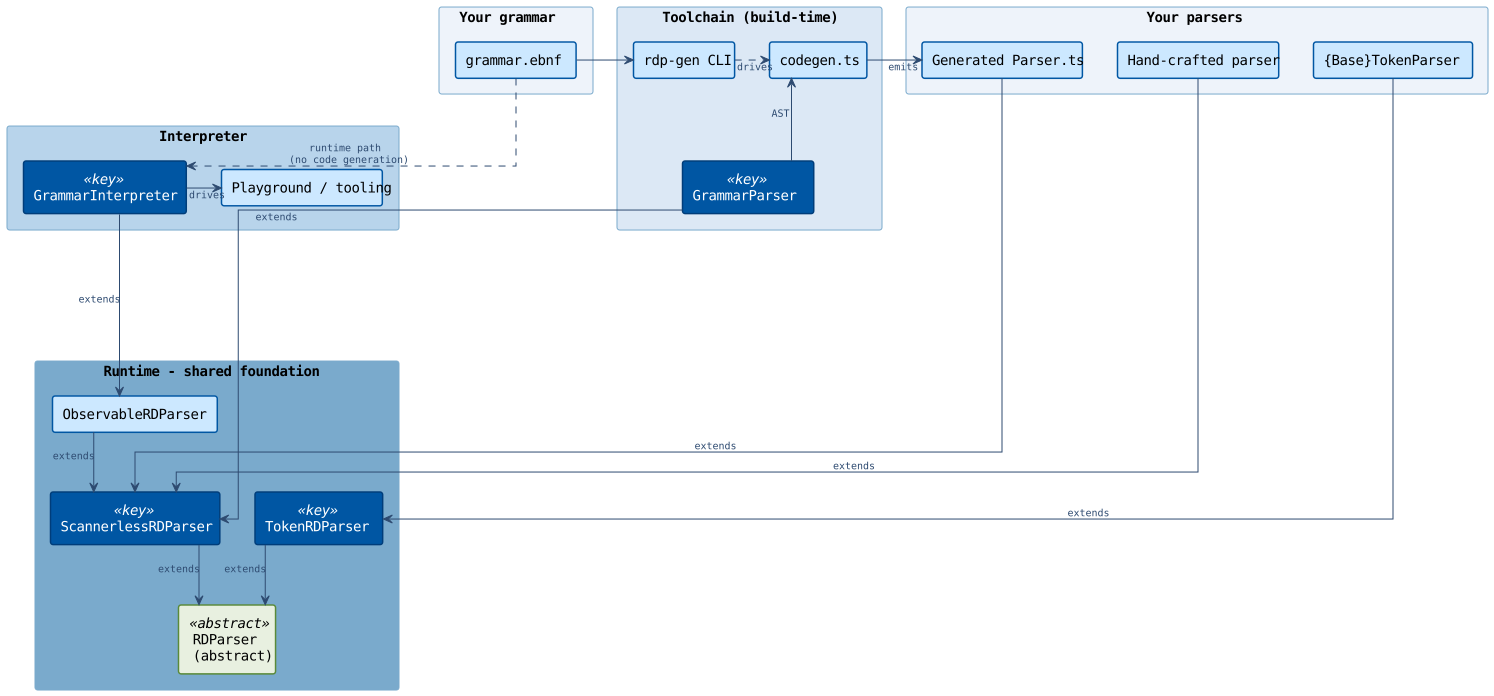
Runtime layer — RDParser and ObservableRDParser are the only classes your application ever imports. Both generated and hand-crafted parsers extend RDParser directly.
Toolchain layer — rdp-gen is a build tool. Internally it uses ABNFParser and EBNFParser (both subclasses of GrammarParser, which itself extends RDParser) to parse your grammar file and produce an AST. codegen.ts then walks that AST and emits a TypeScript class that extends RDParser. GrammarParser and its subclasses are toolchain-internal — they are not part of the generated output and not exported from the public API.
Interpreter layer — GrammarInterpreter executes a grammar at runtime without a code-generation step, which is how the playground and other tooling work. It also extends RDParser.